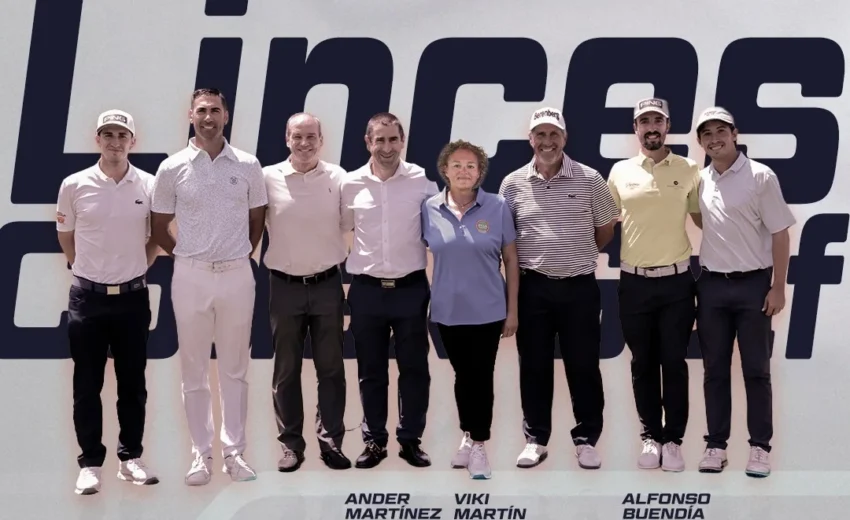

Codex Golf Linces Score 2nd at the Bizkaia PGAe Open
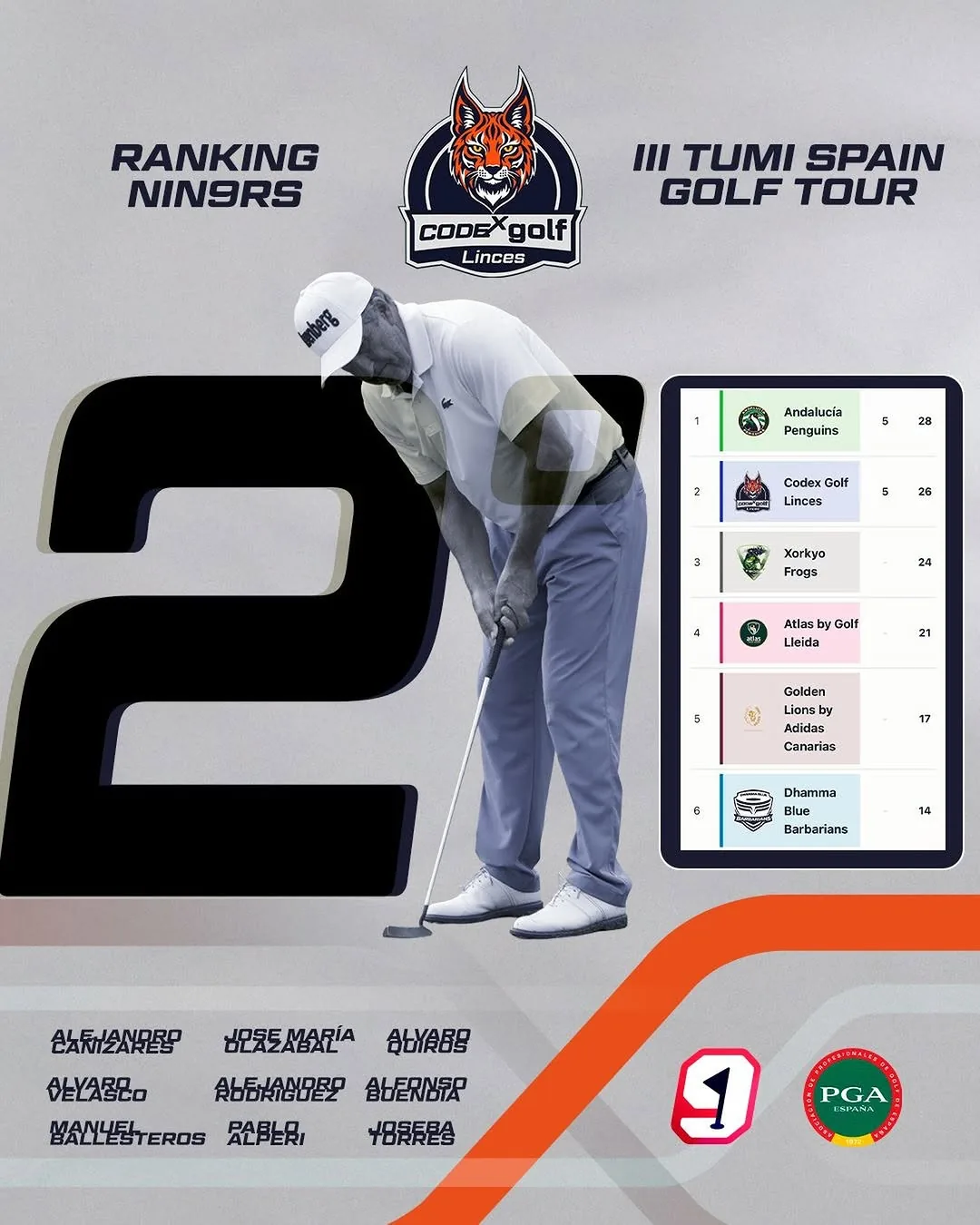
Codex Golf Linces have wrapped up the V Bizkaia PGAe Open with a second place in the team ranking of the III TUMI Spain Golf Tour, a result that confirms the consolidation of the sporting and brand project Codex Golf has deployed within the professional circuit of the PGA of Spain. For a consultancy specialised in club management, the reading of this result goes beyond the podium: every stop of the circuit is a showcase, a commercial lever and a positioning tool worth analysing through the lens of business.
What Codex Golf Linces is and why it matters to the sector
Codex Golf Linces is the competitive team tied to the brand, a line-up that brings together professional players and Spanish golf icons under the same umbrella: Alejandro Cañizares, José María Olazábal, Álvaro Quirós, Álvaro Velasco, Alejandro Rodríguez, Alfonso Buendía, Manuel Ballesteros, Pablo Alperi, Joseba Torres and the youngest members of the block make up a roster built to score points in the NIN9RS ranking of the TUMI Spain Golf Tour circuit organised by the PGA of Spain.
The team’s structure follows a consultancy logic applied to sport: names with a history to dress the brand, young profiles to secure competitive continuity, and a strong visual identity —the Iberian lynx as a totem— that sets the squad apart from the rest of the circuit. This combination is the exact playbook a club director should study when thinking about creating their own team or partnering with an existing one.
Reading the second place at the Bizkaia PGAe Open
The ranking published after the Basque stop places Andalucía Penguins at the top with 28 points and Codex Golf Linces in second position with 26 points, ahead of Xorkyo Frogs, Atlas by Golf Lleida, Golden Lions by Adidas Canarias and Dhamma Blue Barbarians. It is a tight margin that keeps the fight for the circuit lead very much alive and, above all, guarantees media visibility for the brand at every new stop.

For a facilities manager, the operational conclusion is clear: investing in a competitive team only pays off if the squad is systematically at the front. A consolidated second place, like the one Codex Golf’s line-up has just signed, guarantees constant presence in newsletters, social media and specialised press; a mid-table position, on the other hand, dilutes the advertising return.
Five management keys behind the model
The journey of Codex Golf Linces within the TUMI Spain Golf Tour distils five decisions applicable to any club aiming to build a competitive team or sponsor an existing one:
- Roster curation. Combining established names with emerging profiles balances media impact and mid-term projection.
- Distinctive visual identity. A recognisable crest —in the case of Codex Golf Linces, the Iberian lynx— speeds up brand recall and carries over coherently to merchandising, press and social media.
- Calendar aligned with commercial goals. Every stop of the circuit should be linked to an activation: an open day, a discounted fitting session or a clinic with a team player.
- Rigorous return measurement. Beyond the ranking position, it is worth auditing social media reach, press mentions, leads captured and membership sign-ups attributable to each stop.
- Season-to-season continuity. A sporting project is measured in years, not months. Investor patience is what separates decorative sponsorship from one with real return.
Codex Golf Linces as a brand asset for the sector
The presence of Codex Golf Linces in the NIN9RS ranking does more than reinforce the consultancy’s branding; it also works as a case study for club directors who want to understand how a professional sporting project with commercial impact is built. Saying a club bets on high performance is one thing; proving it with verifiable results on an official PGA of Spain circuit is something else entirely.
For managers torn between investing in infrastructure or in a sporting project, the reading is nuanced: the ideal is to combine both. A facility that only offers services without a sporting project lacks a narrative; a competitive team without facilities to back it up is reduced to an advertising billboard. The Linces model points to an integration between both planes.
Common mistakes when replicating this model
- Sponsoring a single player instead of a team, losing the squad’s multiplier effect.
- Failing to tie every stop of the circuit to a concrete commercial action at the club.
- Improvising social media content instead of planning pieces in advance.
- Measuring return only by the sporting position and forgetting brand metrics.
Next steps for the rest of the season
There are stops still ahead in the TUMI Spain Golf Tour and the two-point gap with the leader is perfectly recoverable. For Codex Golf Linces, the second place at the Bizkaia PGAe Open confirms that the competitive model works, and is also a reminder that no ranking lead is won without management discipline, a clear calendar and constant review of results.
If you run a club, an academy or a course and want to explore how to integrate a sporting project of this calibre into your strategy, you can contact the Codex team from the official contact page or visit the Burgos headquarters via this location. The experience accumulated with Codex Golf Linces is an asset we put at the service of directors and managers who understand golf as a business.
Frequently asked questions
What exactly is Codex Golf Linces?
It is the competitive team linked to the Codex Golf brand that takes part in the NIN9RS ranking of the III TUMI Spain Golf Tour, an official professional circuit within the framework of the PGA of Spain.
Which players are part of Codex Golf Linces?
Members include Alejandro Cañizares, José María Olazábal, Álvaro Quirós, Álvaro Velasco, Alejandro Rodríguez, Alfonso Buendía, Manuel Ballesteros, Pablo Alperi and Joseba Torres, alongside younger profiles that bring continuity to the project.
What result did the team get at the Bizkaia PGAe Open?
Codex Golf Linces signed a second place in the overall circuit ranking after the Bizkaia PGAe Open stop, finishing two points behind the leader.
How can a club replicate this sporting model?
By defining a roster with a balanced mix of veterans and youth, tying each stop to a concrete commercial action, measuring brand return beyond ranking position, and sustaining the project across several seasons so the investment can mature.